


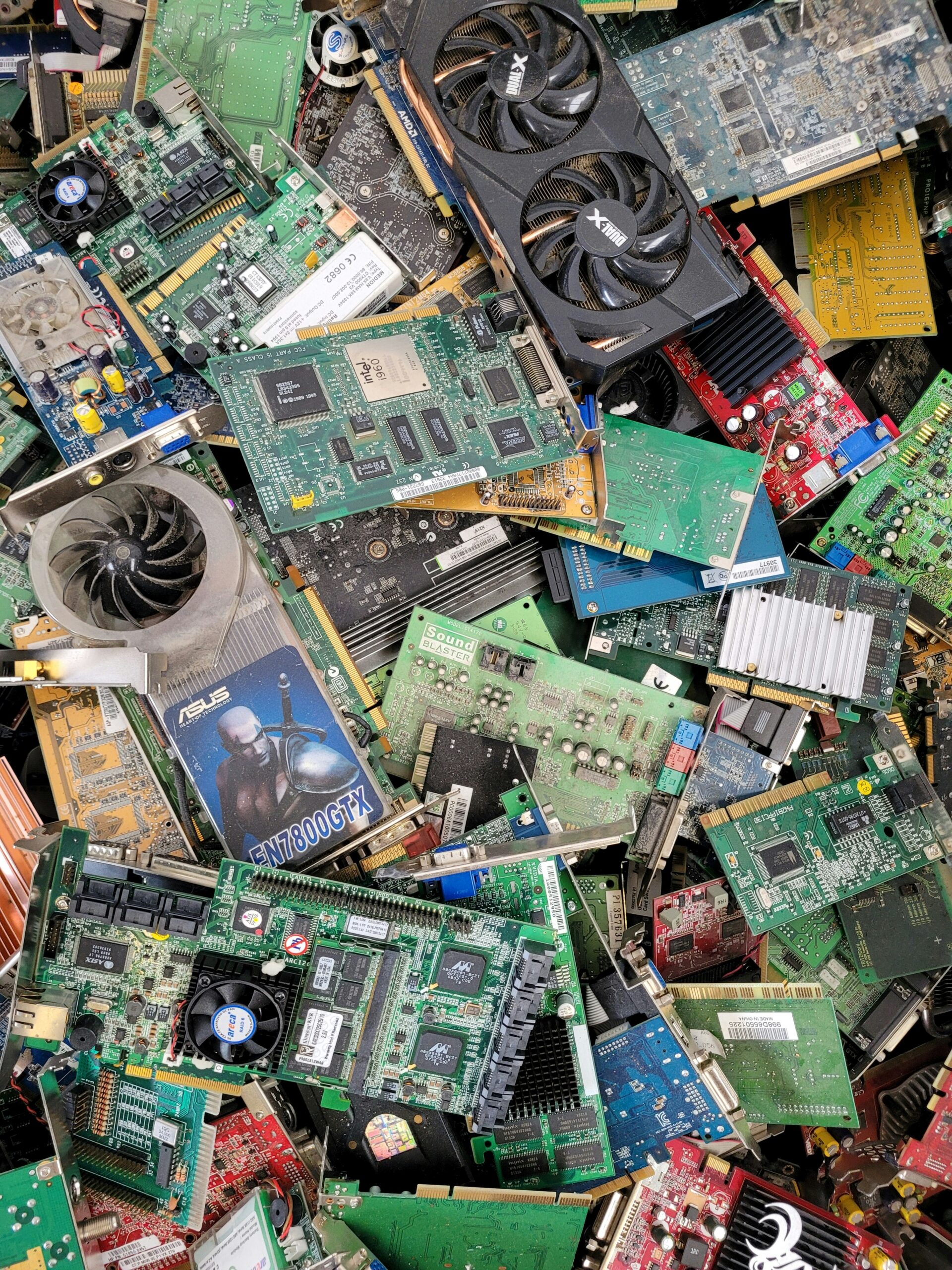
Electronic waste has been prohibited from South African landfills since 23 August 2021. Fluorescent lamps and tubes were banned five years before that. Yet somewhere between 360,000 and 530,000 tonnes of e-waste is generated in the country each year, and only 7 -12% of it is formally recycled.
If e-waste cannot legally go to landfill, and most of it is not being recovered, then a very large volume of hazardous, valuable material is moving through channels nobody is measuring.
“This year we are seeing more enforcement on the e-waste stream to close this gap, and with a new National Waste Management Strategy on the radar, this trend is likely to continue,” says Dirk de Wet, Chief Operating Officer at Oricol Environmental Services.
“For years, e-waste compliance was treated as a paperwork exercise. That era has ended. The question is no longer whether you have a policy on e-waste. It is whether you can produce the evidence trail to prove that your e-waste stream is accounted for via an accredited treatment and recovery pathway.”
According to extended producer responsibility (EPR) regulations, the grace periods that softened the introduction of EPR obligations for electrical and electronic equipment have closed. Producers of electronic products are now expected to meet gazetted annual collection and recovery targets, and those targets step up each year.
Fee payment alone no longer discharges the obligation. Regulators want traceability: proof that material reached a licensed facility and was handled under specific conditions.
Why the ban exists
A single fluorescent tube contains enough mercury to contaminate 30,000 litres of water. Monitors, circuit boards and batteries carry lead, cadmium and mercury alongside gold, platinum, indium and copper.
Buried in a landfill, the toxic fraction may have the potential to leach into groundwater, and the valuable fraction in e-waste is lost permanently. It is the worst of both outcomes: an environmental risk and a resource destroyed in the same act.
A chain, not a single operator
Helping companies comply with e-waste regulations, Oricol has positioned itself as the first link in that chain, the point at which material leaves a client’s premises and enters a documented recovery route.
Oricol collects e-waste from corporates and industrial generators, stores and transports it under controlled conditions, and destroys data-bearing devices securely. Every load is documented and issued with a recycling or safe disposal certificate.
The material then moves to specialist recovery partners, including those who extract the metals. Lamps and fluorescent tubes run through a separate stream, the ORIPACK collection system, which Oricol has operated since 2014.
“Our job is to make sure that material leaves a client’s premises safely, arrives at a licensed processor intact, and is documented at every step. The recovery specialists do what they do best. A circular economy for electronics is best built by a network of suppliers that can document the disposal and recovery process, while ensuring that sensitive data is destroyed.”
The massive opportunity in e-waste
E-waste is the fastest-growing waste stream in South Africa by volume, and the commodity case for recovering it is strengthening as gold and copper prices climb. Urban mining is now a serious secondary resource proposition.
Government pilots in the Eastern Cape and Northern Cape have collected around 86,000kg of e-waste nationally to date. Set against annual arisings above 360,000 tonnes, that figure shows how much economic value remains on the table.
What is coming next
The Draft National Waste Management Strategy 2026 names waste electrical and electronic equipment among the priority streams for intervention, noting recycling rates below 10% and the fastest percentage growth in volume of any stream.
The new national strategy targets 40% diversion of collected waste from landfill within five years and lists Waste Electrical and Electronic Equipment (WEEE) among six producer responsibility schemes earmarked for rapid development between 2026 and 2031.
Norms and standards for e-waste operators are also in development, which will draw a hard line between licensed and unlicensed handlers.


